
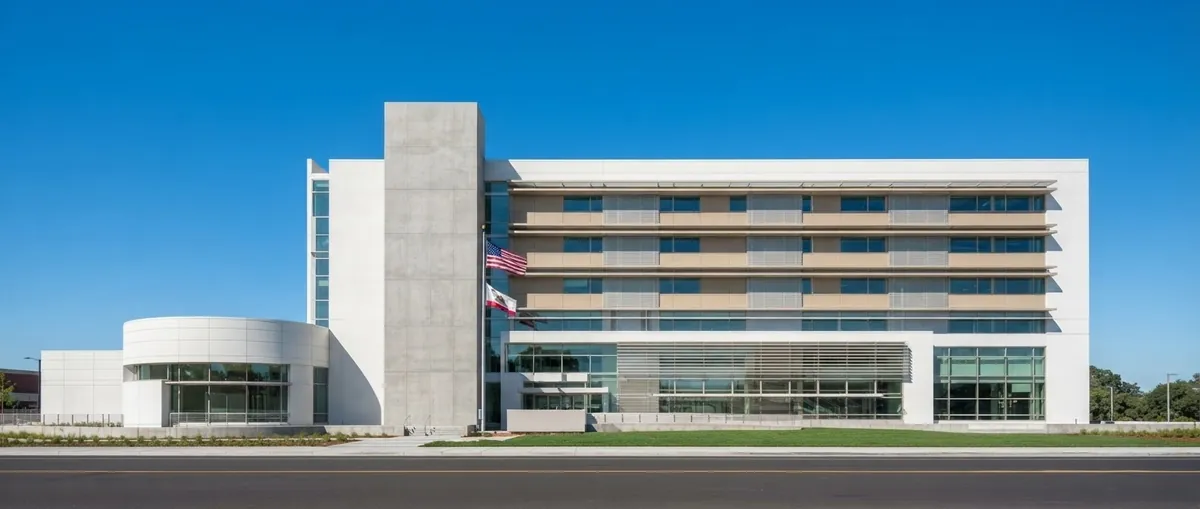
Court records of Sonoma County, California, are maintained by the Clerk of the Superior Court and the Clerk-Recorder-Assessor's office of the county. SonomaCourt.us helps find public information about court cases in the county. Additionally, residents can use the Superior Court case portal, contact the court records department, or visit the clerk's office in person. Official public records of the county are also available through the Clerk-Recorder online index.
Sonoma Court System Overview
Sonoma County is served by the Superior Court of California, County of Sonoma — the only court of general jurisdiction at the state level for this county. In California, there are no separate district or municipal courts: the system is unified into superior courts, one for each of the 58 counties. The Sonoma Superior Court handles all criminal, civil, family, probate, and traffic cases. The court operates under the administrative leadership of the Presiding Judge, elected by the court's judges. At the federal level, Sonoma is part of the Northern District of California (U.S. District Court for the Northern District of California).
Courts Serving Sonoma
Residents of Sonoma County may have cases in several courts depending on the type of claim or charge.
| Court | Address | Phone |
|---|---|---|
| Superior Court of California, County of Sonoma (main building) | 600 Administration Drive, Santa Rosa, CA 95403 | (707) 521-6500 |
| U.S. District Court, Northern District of California (nearest — San Francisco) | 450 Golden Gate Avenue, San Francisco, CA 94102 | (415) 522-2000 |
| U.S. Bankruptcy Court, Northern District of California (Santa Rosa Division) | 99 South E Street, Santa Rosa, CA 95404 | (707) 525-8539 |
Separate municipal courts have not existed in California since 1998 — they are merged with county superior courts.
What Types of Cases Sonoma Courts Hear
The Sonoma County Superior Court has unlimited jurisdiction at the state level. Here are the main categories of cases:
- Criminal cases: felonies, misdemeanors, infractions
- Civil cases: claims of any amount, including small claims cases
- Family law: divorce, custody, alimony, paternity, restraining orders
- Probate cases: estate management, guardianship, conservatorship, trusts
- Juvenile cases: juvenile offenses, child protection, adoption
- Traffic violations and DUI
District Court Cases in Sonoma
In California, the superior court is the only court of first instance with general jurisdiction — there is no separate "district court" at the state level. The Superior Court of Sonoma handles all felonies from inception to sentencing. Cases begin with an indictment or complaint by the district attorney. After arraignment and a preliminary hearing, the judge determines if there is enough evidence to proceed to trial. Civil claims with demands over $25,000 also fall under the court's unlimited jurisdiction. Cases are assigned to judges according to the court's internal rules, and appeals from the Sonoma Superior Court are filed with the First District Court of Appeal in San Francisco.
Magistrate Court Cases in Sonoma
California does not have separate magistrate courts. Instead, the Sonoma Superior Court distributes cases among various divisions. Misdemeanors and infractions — including traffic tickets and DUI — are handled in the court's criminal division. Limited civil cases cover claims up to $25,000. Small claims cases have a separate limit: individuals can file claims up to $12,500, and businesses up to $6,250 according to California law. Preliminary hearings in felony cases are also conducted by Superior Court judges. When the court is heavily burdened, commissioners may be appointed for certain categories of cases, such as traffic violations.
Family Law, Probate, and Juvenile Matters in Sonoma
Family Law. The Family Law Division of the Sonoma Superior Court handles divorce, legal separation, annulment, child custody, alimony, and the establishment and termination of parental rights. Divorce records are kept in the court, not in the Clerk-Recorder's office. For self-preparation of documents, the California Courts divorce guide is useful.
Probate Cases. The probate division handles cases of estate management of deceased persons, appointment of guardians for minors, conservators for adults, and trust-related matters. Recently filed cases can be viewed through the court case portal.
Juvenile Cases. Juvenile cases — juvenile offenses and child protection cases — are confidential under California law. Access to these records is strictly limited, and the public usually cannot view them.
How Cases Move Through the Sonoma Court System
- Case Filing. A criminal case begins with a complaint by the prosecutor or a grand jury indictment. A civil case is initiated by the plaintiff filing a complaint and paying a court fee. Family and probate cases start with a petition.
- Judge Assignment. The case is assigned to a specific judge or court division according to its category.
- Initial Hearings. In criminal cases — arraignment, where the charges are read to the defendant. In civil cases — a case management conference.
- Pretrial Phase. Parties exchange evidence (discovery), file motions. In criminal cases, plea bargaining may occur.
- Trial or Resolution. The case concludes with a jury verdict, judge's decision, settlement, or plea agreement.
- Post-Decision. Criminal cases — sentencing. Civil cases — enforcement of judgment. Any party may appeal to the appellate court.
Court Administration, Local Rules, and Public Access in Sonoma
The administrative management of the Sonoma Superior Court is carried out by the Presiding Judge in conjunction with the Court Executive Officer. Local court rules are published on the official court website and govern procedural matters specific to the county.
Regarding public access: under the California Public Records Act and the state Constitution, most court records are open. However, certain categories — juvenile cases, sealed records, confidential family documents — are closed to general viewing. Access rules to electronic court records are determined by rule 2.503 of the California Rules of Court.
Attendance at hearings is open to the public, except for closed sessions. The Sonoma Court supports electronic filing (e-filing) 24/7 through its portal. For record inquiries or general questions, contact the court records department:
Court Records and Related Court Resources in Sonoma
- Case Search. The Case Portal of the Sonoma Superior Court uses the Odyssey system and allows online searches for civil, criminal, family, and probate cases.
- Criminal Court Records. Requests for criminal records can be submitted by mail or in person; response time is usually 7–10 days.
- Hearing Calendar. The schedule of sessions by divisions is available on the court's main page in the Court Calendar section.
- Court Records Department. The Records Department provides copies of non-confidential case materials and processes public requests.
- County Public Records. The Clerk-Recorder's online index of official public records contains documents from 1964 to the present. Copies of documents can be ordered through the Official Public Record Copies page.
- Arrest Data. The sheriff's office publishes a daily arrest log, and an extended data set is available on the Open Data portal.
- CDCR Inmate Search. To check the status of individuals in state prisons, use the California Incarcerated Records & Information Search (CIRIS).
- Own Criminal History. California residents can request their own criminal record through the state Department of Justice.
- Vital Records. Birth, death, and marriage certificates are issued by the Sonoma County Clerk-Recorder. The state of California also provides services through CDPH Vital Records.
- Property Taxes. Check and pay your tax bill on the Auditor-Controller-Treasurer-Tax Collector portal.
For a general overview of the state court system, visit California Courts, and the Public Records Judicial Branch page explains the rules for record access at the state level. Additional information about Sonoma County records can be found on SonomaCourt.us.